
Unveiling the Elegance and Durability of Travertine Countertops: A Comprehensive Guide
If you’re on the hunt for an elegant, timeless countertop material, don’t overlook travertine. This natural stone, a form of limestone, is a hidden gem in the world of kitchen and bathroom design. It’s not just about aesthetics, though. Travertine countertops offer a unique blend of beauty and durability that’s hard to beat.
Yet, despite its many benefits, travertine remains somewhat of an underdog in the custom countertop world. Why is that? And more importantly, could travertine be the right choice for your next home improvement project? We’re about to delve into the ins and outs of travertine countertops, shedding light on this often-overlooked material.
Understanding Travertine Countertops
Deeper insights reveal travertine countertops hold their own unique charm in kitchen and bathroom design. Let’s delve further into their definition, origins, and material characteristics to understand why they fall into the category of hidden gems in home improvement projects.
Definition and Origins
Travertine, a form of limestone, occurs in hot springs and limestone caves. The term originates from the Latin word ‘tiburtinus’, a reference to Tibur, an ancient Roman city. Historically, civilizations like the Romans exploited travertine for its durability and aesthetic appeal. Examples include the Colosseum, one of the greatest architectural feats of the ancient world, constructed predominantly using travertine.
Material Characteristics
Deep dives into the material characteristics show travertine countertops stand out in several ways. They showcase distinct patterns as they’re formed by the deposit of minerals and other materials. In terms of colors, travertine ranges from white to cream with occasional beige and brown hues. These properties, along with its natural, earthly feel, contribute to its fine reputation in home décor. However, it’s essential to understand that, as a porous stone, it requires regular sealing to prevent stains and retain its appeal.
Do you have a custom project?
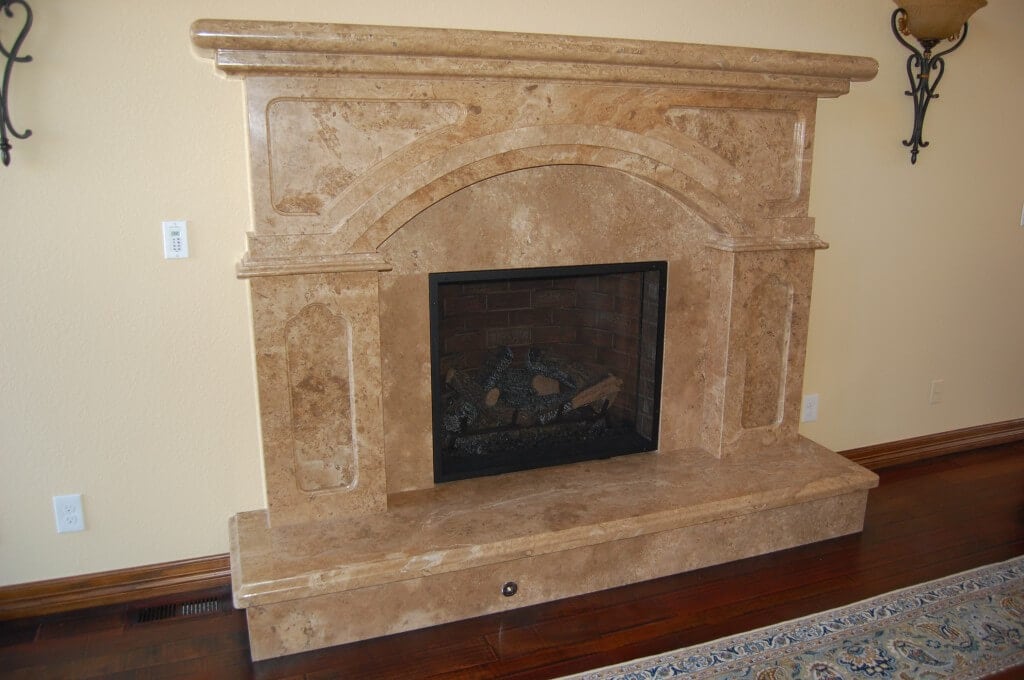
Is your project a little “outside of the box” or do you need custom fabrication done? We love doing specialty projects like the travertine fireplace in the image shown. Give us a call today at (303) 678-8324 or by using the contact form below.
Benefits of Travertine Countertops
Digging into the advantages, travertine countertops hold aesthetic might and a surprising level of durability.
Aesthetic Appeal
Drawing eyes with smooth, natural charm, travertine countertops present an appearance that’s hard to beat. Each piece sports a unique pattern, displaying a spectrum of hues from crisp whites to creamy beiges, sometimes even carrying hints of earthy browns. This variety stamps each countertop with a singular identity, enabling homeowners to exhibit a piece of natural art right in their kitchens or bathrooms.
Durability Aspects
On the flip side, I dare not overlook travertine’s strength as a countertop material. Hailing from the limestone family, this sedimentary rock exudes robustness. Though it’s porous by nature, regular sealing enables it stand up against stains, ensuring its longevity. Time and use engrain into travertine countertops a sense of character, a trait rarely found in synthetic materials. It’s an evidence of resilience, a testament to their durable qualities. A well-maintained travertine countertop doesn’t just last, it matures with grace, scoring additional points in the durability checklist.
Challenges of Travertine Countertops
Despite the unrivaled elegance and resilience of travertine countertops, they present certain challenges that proprietors must address. From stringent maintenance requirements to susceptibility to damage, let’s delve into these challenges.
Maintenance Requirements
Travertine countertops require a certain level of maintenance to uphold their beauty and longevity. Frequent sealing, usually every two years, becomes essential due to the countertop’s porous nature. This maintenance process helps prevent absorption of liquids that could cause staining. Furthermore, using pH-neutral cleaners for routine cleaning minimizes the risk of etching on the travertine surface. Thus, while these countertops add an irreplaceable charm to the décor, their preservation demands consistent vigilance.
Vulnerability to Damage
While travertine is appreciated for its strength, it’s also known for its vulnerability to certain forms of damage. The porous nature of travertine makes it more susceptible to stains, particularly from acidic substances. Spills from common kitchen items like wine, juice, or coffee can seep into the pores causing stubborn discoloration if not addressed promptly. Abrasions can also occur despite the countertop’s durable nature. Heavy objects, if dropped, can create chips or cracks. Although the damage is repairable, the frequency of such incidents can compromise the surface quality over time. As such, understanding the limitations of travertine countertops helps proprietors avoid situations that could potentially harm these beautiful gems of home decor.
Design and Installation
When diving into the design and installation of travertine countertops, the complexity of these processes stands out. They boast a wide array of styles and finishes while also demanding keen attention during the installation phase.
Popular Styles and Finishes
Travertine countertops shine in a variety of styles and finishes. The three main categories are polished, honed, and tumbled. Polished travertine, displaying a high-gloss finish, can magnify the sophistication of any space. Its shimmering surface often finds places in luxury homes. On the other hand, honed travertine presents a more subdued, matte finish, offering a modern, minimalist aesthetic. Lastly, tumbled travertine, characterized by its chiseled edges and rustic look, nurtures a quaint charm in classic-style homes. Yet, no matter the style you choose, travertine’s unique patterns and earth-tone colors—ranging from beige and gold to walnut and earthy red—provide a mesmerizing array of choices.
Installation Considerations
As beautiful as travertine countertops are, their installation isn’t a walk in the park. Precise measurements are non-negotiable, as slight errors can lead to impractical adjustments, hindering functionality and aesthetics. Anyway, professional installation remains highly recommended, considering the material’s fragility and the skills required for optimal fitting. This way, you’re ensuring a smooth surface, properly sealed edges, and a structure that can withstand daily wear and tear. Opt for a trusted contractor who’s proficient in working with travertine for peace of mind. Remember, though, that a well-installed travertine countertop isn’t entirely immune to maintenance—it still calls for regular resealing to guard against stains, scratches, and the inevitable passage of time.
Care and Maintenance Tips
Cherishing travertine countertops involves a cycle of daily care routines and long-term maintenance strategies. The regular upkeep will not only ensure the longevity of the countertops but also preserve their exquisitely unique aesthetics over time.
Daily Care Recommendations
Daily care of travertine countertops encompasses both proactive and reactive strategies. Proactively, avoid placing extremely hot cookware directly on the surface, use cutlery holders when cutting, and employ coasters with drinks, all of which help reduce potential scratches and heat damages. Reactively, spills need immediate attention. Routinely, use a soft, wet cloth or sponge with mild, non-acidic soap to clean the surface and dry it promptly with a towel to dodge water stains. Improper cleaning agents, such as vinegar, lemon, or other acidic cleaners, may tarnish the countertop surface.
Long-Term Maintenance Strategies
In order to maintain travertine countertops in the long term, a few essential strategies can be followed. Firstly, regular sealing acts as the primary defense. Resealing every year or two aids in impeding stains, by forming a barrier against moisture penetration. Secondly, address minor scratches and dents timely before they deteriorate into deeper cracks. Opt for professional polishing in case of severe stains, etching, or scratches. Lastly, committed regular inspections can help detect possible issues at an early stage, extending the lifespan of your travertine countertop.
Considering Natural Stone Countertops
Natural stone countertops offer a range of options to suit diverse tastes and needs. Granite impresses with its hardness and heat resistance, while quartz provides low-maintenance durability. Marble brings timeless luxury, and limestone and sandstone offer rustic charm. Travertine adds historical character, and soapstone develops a unique patina over time.
Each material has its strengths and challenges. Some, like granite and quartz, are relatively low-maintenance, while others, such as marble and travertine, require more careful upkeep. Factors to consider include durability, maintenance needs, and stain resistance.
Across all types, professional installation is crucial for longevity. With proper care, any of these natural stone countertops can be a stunning, enduring addition to your home, bringing nature’s beauty indoors and elevating your living spaces for years to come. Contact Advantage Stone Fabrication to start your project today.